"Supreme Court to Hear Landmark Case on Voting Rights"
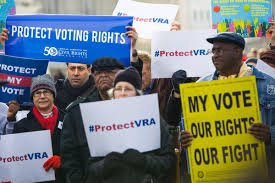
The U.S. Supreme Court is set to hear a pivotal case, Louisiana v. Callais, that could reshape the enforcement of the Voting Rights Act (VRA) and influence the future of racial gerrymandering jurisprudence. The case centers on Louisiana’s congressional redistricting plan, which established a second majority-Black district in a state where Black residents constitute approximately 30% of the population. This move was in response to a 2022 federal court ruling that the previous map likely violated the VRA by diluting Black voters' influence. However, the new map has faced legal challenges from opponents who argue it constitutes unconstitutional racial gerrymandering. The Supreme Court's decision will determine whether the state's remedial efforts comply with constitutional standards and VRA protections.c Service+7Politico+7The Guardian+7
The outcome of this case holds significant implications for the interpretation and application of the VRA, parti
The outcome of this case holds significant implications for the interpretation and application of the VRA, parti
cularly concerning the balance between remedying racial discrimination and avoiding unconstitutional racial classifications. A ruling that limits the scope of the VRA could make it more challenging to address racial disparities in electoral representation, while a decision upholding the new district could reinforce the necessity of considering race in redistricting to ensure fair representation. The Court's deliberations in Louisiana v. Callais will be closely watched as they may set a precedent for future cases involving race and redistricting across the United States.